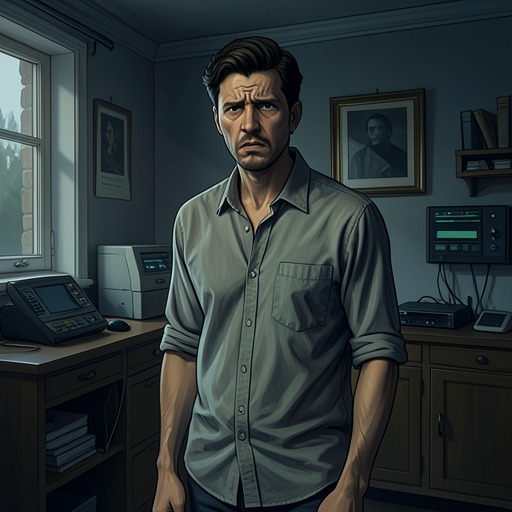
The Wellborne Estate
The Death of Bunny MunroThe Wellborne Estate is a neglected residential landscape that becomes a threshold between Bunny’s self-invention and the consequences he cannot evade. He arrives convinced that he is in control and moving toward an expected encounter; instead, the darkened estate and the people who live there expose the unreliability of that conviction. Later, a confrontation at a run-down house sends him fleeing, while Bunny Junior’s reflections on danger and protection give the setting a parallel place in the story of a child trying to make sense of the adult world.
Setting and Physical Features
At night, the estate first appears as a large, looming mass. Bunny parks his Punto beside a wooden bench that is now empty: the people he had seen there earlier, including a man in a floral dress and hooded youths, have gone. The absence makes the approach feel exposed and unsettled, but the scene does not establish what became of them. Bunny is soaked from the weather and nevertheless proceeds as if his confidence has made the conditions irrelevant.
The route to Flat 95 is poorly lit. Bunny initially misses it, retraces his steps, and peers through a window, where he thinks he can see a faint light in a back room. The layout requires him to navigate a gangway and an unlit entrance rather than arrive directly at a clearly marked destination. A dark stairwell leads upward; later, the narrative places another house amid broken refrigerators, bathtubs, and other discarded objects. These details make the estate materially different from the polished or orderly environments Bunny passes through elsewhere: here, dimness, disrepair, and uncertain access shape what can happen.
Bunny’s Visit to Flat 95
Bunny’s arrival at the flat is driven by a certainty he has constructed rather than by clear knowledge that Georgia is there. He imagines her waiting for him, although he cannot reliably recall having spoken with her. He tries the door, calls through the keyhole and cat flap, and persists when there is no answer. The repeated attempts turn his private expectation into an intrusion at someone else’s home.
The lights suddenly come on, and the door opens to reveal a man in his underwear holding a saucepan. Bunny notices the man’s ankle tattoo and infected toenail, but the decisive information is simpler: the person at the door is not Georgia, and the expected welcome does not exist. When Bunny asks him not to strike, the man does not hit him; the door is kicked shut instead. The encounter ends in rejection, not the meeting Bunny imagined.
Back in the Punto, Bunny masturbates. In the aftermath, he briefly recognizes that the strange visitations he has experienced are connected to his grief and that he is losing his grip on reality. This recognition remains shadowy and short-lived; it does not displace his resentment toward Georgia or halt his self-destructive behavior. The estate therefore marks both a failed pursuit and a moment of insight, with neither producing a lasting change in him.
Flight and Escalating Danger
In a later sequence associated with the estate, Bunny comes out of a dilapidated house with his trousers around his ankles. Mushroom Dave bursts through the front door carrying a golf club and threatens him. Bunny understands that the danger is immediate and that staying would be foolish, so he runs across the yard. The movement from house to yard turns the estate from a place Bunny enters under the influence of fantasy into a setting from which he has to escape.
The sequence also sharpens the contrast between Bunny’s grandiose self-image and his exposed circumstances. At Flat 95, he had treated a faint light as confirmation of a desired encounter; at the house, there is no comparable illusion of control. Mushroom Dave’s pursuit forces Bunny to respond to an actual threat. The estate’s discarded appliances and poorly lit passages are not merely atmosphere: they locate his repeated misjudgments in a physical environment where entrances, exits, and safety are uncertain.
Narrative Significance
The estate gathers several forms of disorientation without explaining them away. Its empty bench, unlit flat, and neglected house offer concrete settings for Bunny’s increasingly unreliable perceptions and for the real hostility he encounters. His brief recognition that grief is shaping his visions occurs only after his imagined destination has failed him, and the subsequent chase returns him to immediate danger before that recognition can become a stable turning point.
Bunny Junior’s reflections elsewhere in this sequence provide a counterpoint to his father’s behavior. He hopes nothing terrible will happen to Bunny and thinks of Ghosts as a kind of protection from the adult world, which appears frightening and difficult to understand. His thoughts do not make the estate safe; instead, they show how a child’s need for reassurance persists alongside the father’s recklessness. The location thus links Bunny’s private collapse with the danger visible to his son, while withholding any promise that recognition, escape, or imagined protection will resolve it.